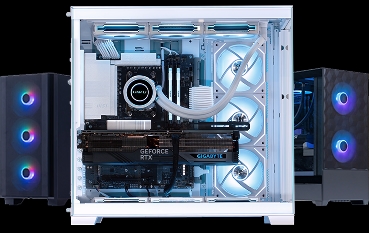


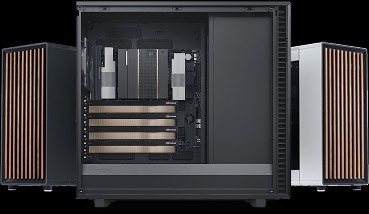


An aging workstation can cost a business more than its replacement price suggests. Slow rendering, long simulation runs and delays processing large datasets consume time that could be spent serving customers or completing projects.
Two tax announcements could strengthen the financial case for addressing those bottlenecks: Canada’s proposed Productivity Mega-Deduction and Ontario’s proposed Competitiveness Tax Cut. For businesses investing in computers and related infrastructure, the central benefit is the opportunity to claim eligible equipment costs sooner.
What the proposals would change
The federal Productivity Mega-Deduction proposes permanent immediate expensing for a broad range of depreciable assets acquired on or after September 15, 2026. Eligible costs would be deductible in the tax year the equipment becomes available for use, rather than spread over several years through capital cost allowance.
Announced on October 28, Ontario’s Competitiveness Tax Cut would parallel the federal measure for provincial income-tax purposes. Ontario estimates more than $8 billion in provincial tax relief over five years and says implementation would follow passage of federal legislation.
For Ontario businesses, the measures would align federal and provincial treatment of eligible investments. They do not mean a business can deduct twice the purchase price from the same taxable income.
Where workstations and servers fit
General-purpose computer hardware and systems software normally fall within capital cost allowance Class 50. Depending on classification and eligibility, business desktops, professional workstations and general-purpose servers would generally fit within the proposed immediate-expensing framework.
There is an important qualification: immediate expensing for computers is not an entirely new idea. CRA already describes an earlier proposal allowing a 100% first-year deduction for qualifying Class 50 property acquired after April 15, 2024 and available for use before 2027.
For computing buyers, the newer proposals therefore matter particularly for their intended permanence and broader coverage. Businesses should check which rules apply to their specific purchase rather than assume the latest announcement creates an additional deduction.
What a 100% write-off actually means
A full write-off reduces taxable income by the eligible cost. The tax savings depend on the purchaser’s applicable tax rate and ability to use the deduction.
Consider a hypothetical business purchasing a $10,000 workstation entirely for business use. At an assumed combined income-tax rate of 25%, a full deduction would reduce income tax by $2,500, leaving an after-income-tax cost of $7,500, excluding sales-tax effects.
The business still pays the supplier’s invoice. The advantage is receiving the deduction sooner; much of that deduction would otherwise have been claimed over time. The $2,500 is therefore not automatically an additional saving over the equipment’s lifetime.
Turning tax relief into productive capacity
The business opportunity is to connect the tax treatment with a measurable operational improvement.
An architecture firm might evaluate a workstation that handles larger models and reduces rendering delays. An engineering team might prioritize simulation throughput. A media company might address editing and export bottlenecks, while an AI developer might assess a GPU server for workloads it expects to run regularly.
These are investment decisions first. The useful questions are practical: How much staff time could the upgrade save? Will it support larger projects? Can it remove a constraint that limits revenue?
Immediate expensing could also improve the financial case for owning local compute. Businesses comparing a workstation or server with cloud services should model utilization, software licensing, electricity, maintenance and support alongside tax timing. A faster deduction strengthens one part of that calculation; it does not determine the answer.
Planning the purchase
Timing deserves attention. Under the federal proposal, the deduction is tied to when equipment becomes available for use. Placing an order or paying a deposit is not, by itself, enough to establish that timing.
Businesses should coordinate configuration, delivery and deployment with their fiscal year and have their accountant confirm eligibility, business-use allocation and the applicable rules. Buyers without current taxable income may not receive an immediate cash-tax benefit.
For companies already constrained by their hardware, these proposals provide a reason to revisit deferred upgrades and assess their productivity value.
Quoted Tech builds and supports custom workstations and servers in Toronto, with configurations matched to the applications and workloads businesses rely on. Start with the computing bottleneck, identify the right system, and have your accountant assess how the available tax treatment affects the investment.
This article reflects announcements available as of October 29, 2026. The measures discussed remain subject to legislative implementation and applicable eligibility rules. General information only; consult your tax advisor about your circumstances.