



When purchasing a prebuilt gaming desktop, buyers generally face two distinct categories of system integrators: custom component builders (who assemble PCs using standard, off-the-shelf retail hardware) and mass-market OEM builders (who sell fixed, pre-configured systems using proprietary components with minimal customization).
While off-the-shelf OEM prebuilts found on retail shelves offer immediate convenience, they often impose hidden compromises, including locked BIOS firmware, proprietary motherboard power headers, undersized power supplies, and restricted chassis airflow.
This technical guide evaluates the structural differences between custom component building and mass-market OEM manufacturing, detailing how component customization affects performance, thermal headroom, and long-term value.
1. Structural Comparison: Custom Component SI vs. Locked OEM Mass-Producer
| Structural feature | Quoted Tech | Fixed off-the-shelf OEM |
|---|---|---|
| Component selection | 100% granular and customizable (select specific GPUs, CPUs, RAM, PSUs) | Fixed SKUs and rigid pre-configurations (take-it-or-leave-it specs) |
| Motherboard layout | Standard ATX / Micro-ATX (retail MSI, ASUS, Gigabyte boards — simple upgrade paths) | Proprietary OEM layout (non-standard mounting and power headers). Generally non-upgradable. |
| Power supply unit (PSU) | Standardized ATX (650W–1600W, modular cables) | Proprietary server-style PSUs (exact-wattage headroom, fixed cables). Limited cooling and longevity at times. |
| Memory profiles | Unlocked XMP / EXPO (full rated speeds: DDR5-5200+) | Locked / default JEDEC speeds (often underclocked to 4400MHz) |
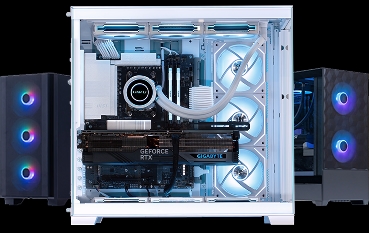
| Thermal & airflow design | High-airflow chassis + 240mm/360mm AIOs or single/dual tower-block air coolers | Enclosed plastic/metal baffles + minimal air or AIO cooling |
| Software loadout | Clean Windows installation (zero bloatware or telemetry) | Extensive pre-installed bloatware |
| Upgrade headroom | Unrestricted (swap any component individually over time) | Highly restricted (component replacements often require a new chassis or PSU) |
2. Technical Deep Dive: The Hidden Costs of Fixed OEM Builds
A. Proprietary hardware lock-in vs. open ATX standards
Mass-market OEM prebuilts frequently rely on custom motherboards and proprietary power supply connectors to reduce manufacturing costs, utilizing non-standard power pinouts and proprietary board shapes that fit exclusively within their specific chassis enclosures.
If a proprietary power supply or motherboard fails outside of warranty, the user cannot walk into a local computer store or order a standard replacement online. In contrast, custom component builders like Quoted Tech utilize standard ATX/Micro-ATX motherboards and standardized ATX power supplies, ensuring every part can be individually replaced or upgraded for years to come.
B. Memory frequencies: unlocked XMP/EXPO vs. downclocked JEDEC
When buying high-speed DDR5 memory, hardware performance depends on enabling Extreme Memory Profiles (XMP) or Extended Profiles for Overclocking (EXPO) within the system BIOS.
- The fixed OEM approach. Third-party testing reveals that many off-the-shelf OEM prebuilts ship with memory running at basic JEDEC fallback speeds (such as DDR5-4400 or DDR5-4800), even when higher-speed memory modules are installed. Furthermore, OEM BIOS interfaces often lock these settings, preventing users from toggling XMP/EXPO profiles manually.
- The custom SI approach. Custom component builders calibrate and test each system on the bench prior to dispatch, manually activating XMP or EXPO profiles to ensure memory operates at its full rated frequency (e.g., DDR5-5600 / DDR5-6000) for maximum frame rate stability.
C. Thermal management and power scaling
Mass-market OEM chassis often prioritize compact exterior dimensions over internal airflow, utilizing enclosed solid front panels with restricted side vents.
Under heavy gaming loads, high thermal resistance inside an enclosed chassis forces the CPU and GPU to reach thermal limits quickly. To prevent hardware damage, the system BIOS imposes aggressive power limits, scaling down boost clock frequencies. In contrast, custom component builders utilize open-mesh front panels paired with high-performance AIO liquid coolers, maintaining lower CPU/GPU temperatures and sustaining maximum boost clocks indefinitely without thermal throttling.
3. The Quoted Tech Custom Builder Advantage
Quoted Tech combines the hardware customization of a manual DIY build with the testing, assembly, and warranty support of a system integrator.
- Custom component flexibility. Rather than selecting from rigid pre-configured models, users can select the precise CPU, GPU, memory capacity, storage speed, and cooling solution needed for their specific workload — whether that is competitive 1080p esports, high-refresh 1440p gaming, or 4K ray tracing.
- Third-party reviewer validation. In a review of the Quoted Tech Frontier lineup, Tom’s Guide awarded the system an Editor’s Choice award, praising its “sleek and subtle easy-to-open case,” standard retail component layout (such as the MSI Pro X870-P motherboard), and near-silent thermal performance under load.
- Clean Windows installation. Fixed off-the-shelf retail PCs often arrive loaded with pre-installed trialware, background antivirus software, and OEM telemetry tools that consume background CPU cycles. Quoted Tech installs a clean, unbloated operating system image, ensuring 100% of system resources are allocated to game performance.
- Domestic Canadian warranty. Purchasing a custom build from Quoted Tech includes a 3-year parts / 5-year labour warranty serviced locally within Canada. This eliminates the risk of cross-border shipping costs, customs delays, or international return hassles common with foreign prebuilt vendors.
Start Your Build
Get started on your own custom build today with Quoted Tech.